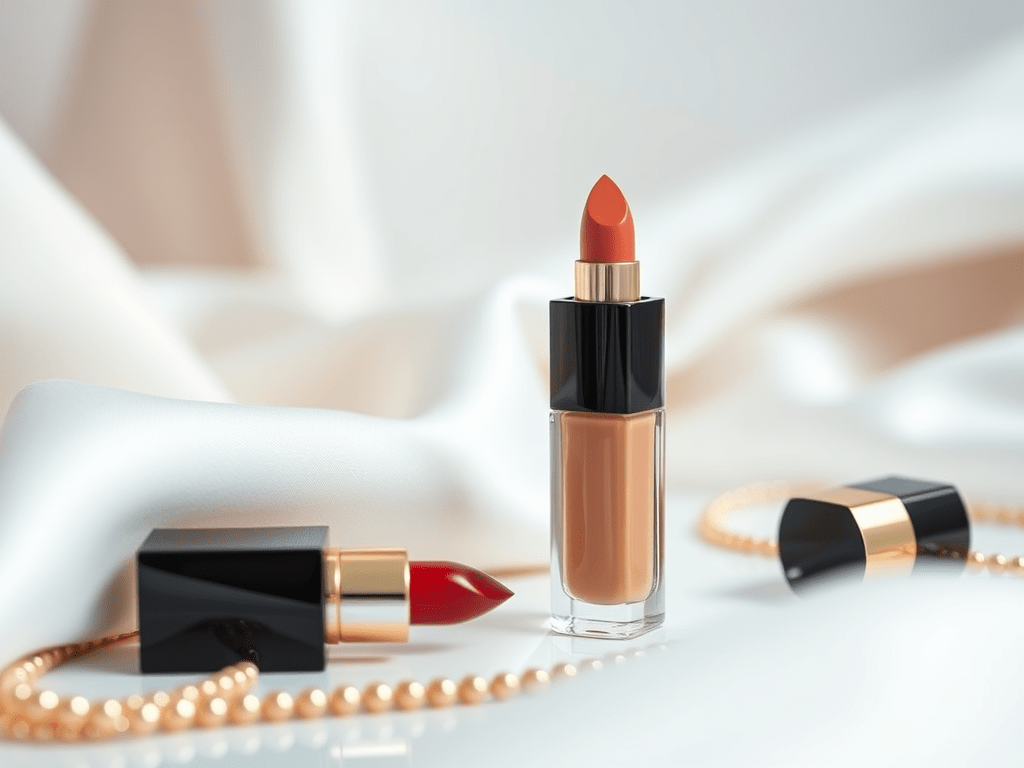
Introduction: The Allure of Luxury Beauty
For many, luxury beauty is more than just makeup and skincare—it’s a status symbol. A ₹10,000 foundation from Chanel or Dior isn’t just about coverage; it’s about exclusivity, prestige, and experience.
Luxury brands have perfected the art of marketing, making consumers believe that higher prices equal better quality. But is that really the case? Are we paying for better ingredients and innovation, or just a fancy logo and luxurious packaging?
Before you spend ₹5,000 on a lipstick or ₹15,000 on an anti-aging serum, let’s break down whether luxury beauty is truly worth the price—or if you’re just paying for the brand name.

https://lumeth.com (Get it on Playstore and AppStore)
Powered by:
Part 1: The Price of Luxury – What Are You Really Paying For?
When you purchase a luxury beauty product, what exactly are you paying for? Is it premium ingredients, advanced formulations, or cutting-edge research? Or is it just the brand name, packaging, and marketing?
Many consumers believe that higher prices equal better quality, but that’s not always the case. Luxury beauty brands invest heavily in branding, advertising, and celebrity endorsements, often making the actual product a fraction of the total cost. Let’s break it down.
1. The Cost of Branding and Marketing
Luxury beauty brands spend millions creating an image of exclusivity and prestige. From high-fashion campaigns to celebrity endorsements, these brands craft an identity that makes their products seem more desirable.
- Branding and Advertising: High-end beauty brands collaborate with A-list celebrities, supermodels, and influencers to build brand prestige. For example, a global beauty campaign featuring a Hollywood actress or Bollywood superstar can cost crores of rupees.
- Retail Experience: Walk into a luxury beauty store, and you’re not just buying a product—you’re entering a world of elegance, customer service, and ambiance. These flagship stores in premium malls have lavish décor, well-trained beauty consultants, and a luxurious experience, all of which are factored into the product pricing.
- Packaging: Luxury beauty packaging is designed to feel exclusive. From gold-plated compacts to hand-crafted perfume bottles, these details add to the price without necessarily improving the product itself.
2. The Price of Ingredients – Are Luxury Formulations Superior?
One of the biggest claims of luxury beauty brands is that their formulations contain premium, high-quality ingredients. But how much of that is actually true?
- Scientific Research and Innovation: Some luxury brands do invest in skincare research and cutting-edge formulations. For instance, brands like La Mer and Estée Lauder develop patented skincare complexes that claim to provide superior anti-aging benefits.
- Dupes and Similar Formulas: Many luxury skincare and makeup products contain ingredients that can be found in affordable alternatives. A ₹10,000 serum may have a similar ingredient list to a ₹1,500 drugstore product, with only minor variations in concentration and texture.
- Ingredient Costs vs. Retail Price: The actual cost of ingredients in a ₹5,000 foundation may only be ₹500–₹1,000, while the rest goes into branding, packaging, and retail markups.
3. Manufacturing and Distribution Costs
Luxury beauty brands control every aspect of their supply chain, from manufacturing to retail. Unlike drugstore brands that mass-produce products, luxury brands often limit production to maintain exclusivity.
- Smaller Batches & Exclusive Production: Some high-end brands claim that their products are made in smaller batches with rigorous quality control, adding to the cost.
- Global Distribution & Import Costs: Many luxury beauty brands are imported, and customs duties can significantly increase the retail price. A high-end perfume that costs ₹8,000 in India may be priced at ₹5,000 in Europe or the U.S., simply due to import taxes and duties.
Are You Paying for Quality or Just Prestige?
While some luxury beauty products do contain better formulations and cutting-edge research, many of them are priced significantly higher than their actual production cost. A large portion of what you pay goes toward marketing, packaging, and the experience of owning a luxury product, rather than just the quality of the formulation.
So, is it worth spending ₹7,000 on a luxury lipstick when a ₹700 alternative offers a similar result? It depends on what you value—performance or prestige.
Part 2: Luxury vs. Drugstore – Is There a Real Difference in Performance?
The beauty industry thrives on the belief that higher prices mean better performance, but is that really the case? Do luxury products genuinely outperform their drugstore counterparts, or is it just a perception created by branding?
To answer this, let’s compare luxury and drugstore beauty products across different categories—skincare, makeup, and fragrance—to see where the differences truly lie.
1. Skincare: Are Expensive Serums and Creams More Effective?
Luxury skincare brands often market their products as scientifically advanced, with claims of anti-aging, hydration, and skin renewal. But do these expensive creams and serums actually work better than drugstore skincare?
Luxury Skincare:
Luxury skincare products often feature:
✔ Exclusive ingredients like rare botanical extracts, peptides, or marine-based elements (e.g., La Mer’s “Miracle Broth”)
✔ Patented technology and research-backed formulations
✔ High-end packaging that enhances the premium experience
💰 Example: La Mer Crème de la Mer (₹30,000 for 60ml)
- Claims to contain “Miracle Broth”, a fermented sea kelp extract that hydrates and rejuvenates skin.
- Loved by celebrities and marketed as a luxury must-have.
Drugstore Skincare:
Drugstore brands use similar active ingredients found in luxury formulations but at a fraction of the cost. Many dermatologists argue that a good moisturizer doesn’t need to cost thousands to be effective.
💰 Example: Nivea Soft Moisturizing Cream (₹300 for 100ml)
- Contains glycerin, vitamin E, and jojoba oil, ingredients commonly found in high-end moisturizers.
- Dermatologists often recommend affordable products like CeraVe, The Ordinary, and Neutrogena for effective skincare.
Reality Check:
Many luxury skincare products contain similar active ingredients as drugstore alternatives, but they add exclusive ingredients, fragrance, and luxurious textures to justify the higher price. While some high-end brands invest in extensive research, many drugstore products provide similar benefits at a fraction of the cost.
✅ Verdict: Drugstore skincare can be just as effective as luxury skincare, depending on the formulation. Luxury brands focus more on experience and exclusivity rather than a massive leap in efficacy.
2. Makeup: Do Luxury Foundations, Lipsticks, and Mascaras Perform Better?
Luxury makeup is often marketed as having better pigmentation, longer wear, and more refined textures, but is the difference really noticeable?
Luxury Makeup:
✔ Premium ingredients for smoother application (e.g., finely milled powders, lightweight oils)
✔ Unique shades and luxurious finishes not always found in drugstore options
✔ Designer packaging that enhances the prestige factor
💰 Example: Dior Forever Skin Glow Foundation (₹6,500 for 30ml)
- Claims to offer long-lasting radiance, hydration, and a flawless finish.
- Comes in a glass bottle with elegant branding, making it feel like a luxury experience.
Drugstore Makeup:
✔ Uses similar base formulas but may lack certain high-end ingredients
✔ Fewer luxury finishes and unique shades, but great value for money
✔ Packaging is often simpler and less durable
💰 Example: Maybelline Fit Me Foundation (₹799 for 30ml)
- Offers buildable coverage, matte finish, and oil control, similar to high-end brands.
- Used by many makeup artists as an affordable dupe for high-end foundations.
Reality Check:
While luxury makeup often has more refined textures and better packaging, many drugstore products match or even outperform luxury brands in terms of pigmentation, longevity, and application.
✅ Verdict: Luxury makeup provides a better sensory experience, but drugstore options can deliver equal or better results at a fraction of the cost.
3. Fragrance: Is Luxury Perfume Really Superior?
Perfume is one of the biggest areas where luxury brands dominate the market. A bottle of Chanel No. 5 (₹15,000 for 100ml) or Tom Ford Oud Wood (₹25,000 for 100ml) commands a premium price, but is it worth it?
Luxury Fragrances:
✔ Higher concentration of fragrance oils for longer-lasting scents
✔ Complex, layered notes that evolve over time
✔ Signature blends made by world-renowned perfumers
💰 Example: Maison Francis Kurkdjian Baccarat Rouge 540 (₹40,000 for 70ml)
- Considered an iconic luxury scent, with unique saffron, amberwood, and jasmine notes.
Drugstore & Affordable Fragrances:
✔ Many affordable fragrances smell similar to luxury perfumes but don’t last as long
✔ Fewer unique, complex notes
✔ More linear (don’t evolve much after the first spray)
💰 Example: Zara Red Temptation (₹2,500 for 80ml)
- A dupe for Baccarat Rouge 540, offering a similar scent at a fraction of the price.
Reality Check:
Luxury perfumes often use rare, high-quality ingredients, but many affordable fragrances deliver great scents at lower concentrations. If longevity and depth matter to you, luxury perfumes may be worth the investment.
✅ Verdict: Luxury perfumes tend to last longer and have richer compositions, but affordable dupes can smell nearly identical for less.
Final Thoughts: Is Luxury Beauty Worth It?
The answer depends on what you value most:
✔ If you care about prestige, experience, and packaging, luxury beauty is worth it.
✔ If you want similar results at a fraction of the price, drugstore alternatives are the smarter choice.
Luxury brands sell a lifestyle, an emotion, and an experience, while drugstore brands focus on practicality and affordability.
If you’re looking for performance, many drugstore products match or outperform their luxury counterparts. But if you enjoy the feeling of exclusivity and indulgence, luxury beauty offers an experience that no dupe can fully replicate.
Part 3: The Psychology Behind Luxury Beauty – Why We Pay More for Prestige
Luxury beauty isn’t just about better ingredients or higher quality—it’s about perception. The beauty industry has mastered the art of making us feel like we need expensive products, even when affordable alternatives deliver the same results.
Why do people willingly spend ₹10,000 on a foundation when a ₹1,000 drugstore version performs almost identically? The answer lies in psychological marketing, branding, and social status.
Let’s break down the hidden forces that make luxury beauty so irresistible.
1. The Power of Exclusivity: “If It’s Expensive, It Must Be Better”
Luxury beauty brands limit availability and price their products high to create a sense of exclusivity. The idea is simple:
- If fewer people can afford it, it feels more special.
- If it costs more, we assume it must be better.
This is known as the “price-quality illusion”—where consumers believe higher-priced items are superior, even when there’s no real difference in quality.
💰 Example:
La Prairie’s Skin Caviar Luxe Cream costs ₹50,000+ for 50ml, claiming to contain caviar extract that “rejuvenates” the skin. Meanwhile, Nivea Q10 Anti-Wrinkle Cream (₹500 for 50ml) has a nearly identical ingredient profile—yet lacks the prestige.
Would most people still choose the La Prairie cream if it were priced at ₹5,000? Probably not, because part of its appeal is the high price itself.
2. The Celebrity & Influencer Effect: “If She Uses It, I Need It”
Luxury beauty brands heavily invest in celebrity endorsements and influencer marketing. Seeing your favorite Bollywood actress or international supermodel using a ₹8,000 lipstick convinces you that it’s worth the splurge.
But here’s the secret:
- Celebrities and influencers rarely pay for these products—they are sent PR packages or paid to promote them.
- Many influencers use drugstore dupes but won’t admit it because luxury brands pay them more.
💰 Example:
Charlotte Tilbury’s Pillow Talk Lipstick (₹3,900) became a cult favorite after countless influencers hyped it. But Maybelline’s Color Sensational Nude Nuance (₹799) is nearly identical in shade and formula.
Despite the minimal performance difference, consumers still reach for the more expensive product because it’s what their favorite celebrities and influencers use.
3. The “Luxury Experience” Factor: More Than Just a Product
Buying luxury beauty isn’t just about applying makeup or skincare—it’s about the entire shopping experience.
✔ Elegant store interiors with marble floors and gold accents.
✔ Personalized beauty consultations and complimentary makeovers.
✔ Signature scents and textures that create a luxurious sensory experience.
Luxury brands create a world where buying their products feels like an event. It’s not just about looking good—it’s about feeling expensive, powerful, and elite.
💰 Example:
Walking into a Chanel beauty boutique and getting a customized foundation match feels different from picking up a drugstore foundation at a supermarket. That premium shopping experience is built into the price.
4. Social Status & The “Badge of Wealth”
Luxury beauty products serve as status symbols, much like designer handbags and watches. Owning a Tom Ford lipstick or a Dior perfume signals wealth, taste, and sophistication.
Even if the formula isn’t drastically different from a drugstore version, the prestige of owning a high-end beauty product is part of its value.
💰 Example:
A ₹12,000 bottle of Chanel No. 5 is often purchased not just for the scent, but because it’s a symbol of elegance and sophistication. Meanwhile, a ₹1,200 Zara perfume with a similar fragrance won’t carry the same prestige.
Many people don’t just buy luxury beauty for the product—they buy it for the status it represents.
5. The Fear of Missing Out (FOMO) & Limited Edition Hype
Luxury beauty brands strategically create scarcity to make consumers feel pressured to buy.
✔ Limited-edition releases make products seem rare and exclusive.
✔ Seasonal collections create urgency—if you don’t buy now, you might never get it.
✔ Designer collaborations (e.g., Dior x Rihanna) make even basic products seem ultra-luxurious.
💰 Example:
Pat McGrath Labs once released a limited-edition eyeshadow palette for ₹14,000. Despite the high price, it sold out within hours. Many buyers admitted they purchased it out of fear that they’d miss out, not because they truly needed it.
The reality? Similar shades could be found in a ₹1,500 drugstore palette, but the exclusivity made it feel more valuable.
Final Thoughts: Are You Buying Performance or Perception?
Luxury beauty isn’t just about better products—it’s about the emotional, social, and psychological factors that make us want them.
✔ Some luxury products do offer better formulas, but many have drugstore alternatives that perform just as well.
✔ Branding, exclusivity, and celebrity endorsements drive much of the pricing.
✔ The shopping experience and status symbol effect add to the emotional appeal.
So, is luxury beauty worth the price? That depends on why you’re buying it.
- If you love the experience, the branding, and the exclusivity, luxury beauty is worth it.
- If you just want high-quality products that perform well, many drugstore alternatives can save you thousands.
At the end of the day, luxury beauty is less about what’s in the bottle and more about how it makes you feel.
Part 4: The Smart Shopper’s Guide – When to Splurge & When to Save
Now that we’ve broken down the reality of luxury beauty vs. drugstore alternatives, the big question remains: When should you invest in high-end beauty, and when is it better to save your money?
The truth is, not all luxury beauty products are overpriced hype—some truly offer better formulations, superior ingredients, and enhanced performance. But others? You’re simply paying for branding, packaging, and the shopping experience.
Let’s go category by category and explore where to splurge and where to save.
1. Skincare: Splurge on Actives, Save on Basics
💰 When to Splurge:
✔ Serums & Treatments – If you’re investing in a retinol, vitamin C, peptides, or anti-aging treatment, luxury brands often use stabilized, high-quality ingredients that are more effective.
✔ SPF & Sunscreen – Some high-end sunscreens (like La Roche-Posay or Shiseido) offer better UVA/UVB protection, lightweight textures, and non-greasy finishes.
✔ Prescription-Based Skincare – If a high-end brand offers dermatologist-developed formulations, it might be worth the price.
💸 When to Save:
✔ Cleansers – A face wash stays on your skin for less than 30 seconds before being rinsed off. Drugstore options like CeraVe (₹400) or Simple (₹250) work just as well as a ₹3,000 luxury cleanser.
✔ Moisturizers – Many drugstore brands contain the same hydrating ingredients (hyaluronic acid, glycerin, ceramides) as luxury creams. Nivea Q10 (₹500) vs. La Mer (₹30,000)? The difference is mostly branding.
✔ Toners & Micellar Water – Basic formulas in luxury toners are often identical to ₹500 drugstore versions.
✅ Verdict: Invest in serums & treatments, but save on cleansers and moisturizers.
2. Makeup: Splurge on Foundation & Lipsticks, Save on Mascaras & Eyeliners
💰 When to Splurge:
✔ Foundation & Base Products – Luxury foundations like Giorgio Armani Luminous Silk (₹6,500) and Dior Forever Skin Glow (₹6,000) offer better textures, long-lasting formulas, and color matching. They often feel lighter on the skin and blend better.
✔ Lipsticks – While drugstore lipsticks can be good, luxury brands like Chanel (₹4,500) and Charlotte Tilbury (₹3,900) provide richer pigments, long-lasting hydration, and luxurious packaging.
✔ Eyeshadow Palettes – High-end eyeshadow formulas (like Natasha Denona or Pat McGrath) tend to have better pigmentation, blending ability, and lasting power.
💸 When to Save:
✔ Mascaras – Many drugstore mascaras perform as well (or better) than luxury ones. Maybelline Sky High Mascara (₹899) gives the same volume as a ₹3,500 Lancôme mascara.
✔ Eyeliners – A ₹200 Lakmé eyeliner can work just as well as a ₹2,000 one. The key factor here is the brush quality and staying power, which drugstore brands have mastered.
✔ Blush & Highlighter – Drugstore blushes like Milani (₹1,200) and Maybelline Fit Me (₹500) offer pigmentation that rivals NARS Orgasm (₹4,000).
✅ Verdict: Invest in a good foundation and luxury lipstick, but drugstore mascaras, eyeliners, and blushes work just as well.
3. Fragrances: Splurge for Longevity, But Be Smart
💰 When to Splurge:
✔ Luxury Perfumes – If you want long-lasting, well-balanced, and unique scents, high-end perfumes like Tom Ford (₹25,000) and Maison Francis Kurkdjian (₹40,000) are worth the investment.
✔ Signature Scents – If you want to own a truly unique fragrance that lasts all day, designer brands or niche perfumers are often better than cheaper body mists.
💸 When to Save:
✔ Everyday Fragrances – For casual use, Zara and Bath & Body Works offer amazing scents under ₹3,000 that last decently long.
✔ Perfume Dupes – Many brands now create affordable dupes of expensive perfumes. For example, Zara Red Temptation (₹2,500) smells nearly identical to Baccarat Rouge 540 (₹40,000).
✅ Verdict: Invest in a high-end perfume for special occasions, but save on everyday scents and dupes.
4. Haircare: Splurge on Treatments, Save on Shampoos
💰 When to Splurge:
✔ Hair Masks & Treatments – Luxury brands like Olaplex (₹3,000+) and Kerastase (₹2,500+) contain high-quality ingredients that repair and strengthen hair.
✔ Heat Protectants – If you use styling tools regularly, investing in a high-end heat protectant (₹2,000+) can prevent long-term damage.
💸 When to Save:
✔ Shampoos & Conditioners – Unless you have very specific hair concerns, most drugstore shampoos like Dove (₹250) or Pantene (₹300) work as well as a ₹3,000 luxury shampoo.
✔ Hairsprays & Styling Gels – These are more about hold and texture, so spending extra on a luxury brand is unnecessary.
✅ Verdict: Invest in treatments and serums, but drugstore shampoos and conditioners work just as well.
Final Thoughts: Finding the Right Balance
Luxury beauty isn’t always about better performance—sometimes, it’s about branding, experience, and exclusivity. However, there are certain products where the extra cost is justified.
Smart Shopping Rules:
✔ Splurge on products that have a direct impact on skin health and longevity (serums, foundation, perfumes).
✔ Save on everyday items like mascara, eyeliners, shampoos, and cleansers.
✔ Research before you buy—many drugstore products perform just as well as high-end alternatives.
✔ Test before you invest—visit stores, ask for samples, and compare before making a purchase.
At the end of the day, the best beauty products are the ones that make you feel confident—regardless of the price tag.
Part 5: The Future of Luxury Beauty – Where the Industry is Headed
The luxury beauty industry is constantly evolving, driven by consumer preferences, technological advancements, and changing market trends. While traditional luxury brands have relied on exclusivity, premium pricing, and celebrity endorsements, the future of luxury beauty will look very different.
As more consumers become conscious shoppers, the demand for sustainability, transparency, and innovation is reshaping the way luxury beauty operates. Let’s explore the biggest trends shaping the future of high-end beauty.
1. The Rise of Sustainable & Ethical Luxury Beauty
Luxury beauty brands are now under pressure to prove that their products aren’t just beautiful, but also ethical. Consumers today care about:
✔ Sustainable packaging – Brands like Chanel and Dior are introducing refillable lipsticks and skincare jars to reduce waste.
✔ Cruelty-free & vegan formulas – More luxury brands are moving away from animal testing and animal-derived ingredients.
✔ Ethical sourcing – High-end beauty companies are being pushed to ensure fair labor practices in ingredient sourcing (e.g., mica in eyeshadows).
💰 Example:
Chanel’s Les Beiges Healthy Glow Foundation (₹6,500) now features eco-friendly glass packaging, and many luxury brands are following suit.
✅ Future Trend: Luxury beauty will need to prove its commitment to sustainability to maintain consumer trust.
2. AI & Personalization: The Future of Luxury Skincare
Luxury beauty is moving towards hyper-personalization, using AI and technology to create customized beauty solutions for consumers.
✔ AI-powered skin analysis – High-end brands now offer virtual consultations where AI scans your skin and recommends products.
✔ Customized skincare formulas – Some brands are already offering serums and creams tailored to an individual’s skin needs.
✔ Smart beauty devices – High-end brands like Foreo and Dyson are creating AI-powered skincare and haircare gadgets for a personalized beauty experience.
💰 Example:
Lancôme’s Le Teint Particulier (₹10,000+), an AI-powered foundation, is custom-blended based on your exact skin tone and undertone.
✅ Future Trend: AI-driven beauty will become a major selling point for luxury brands, offering a one-of-a-kind beauty experience.
3. The Fall of Traditional Advertising & The Rise of Influencer Luxury
Gone are the days when luxury beauty relied solely on magazine ads and TV commercials. Today, social media influencers are shaping luxury beauty trends more than ever.
✔ TikTok & Instagram influence – Viral beauty trends now determine which products sell out in minutes.
✔ Micro-influencer collaborations – Brands are partnering with niche influencers instead of big celebrities for more authentic engagement.
✔ User-generated content (UGC) – Real customer reviews and tutorials are more trusted than traditional ads.
💰 Example:
Dior’s Lip Glow Oil (₹4,500) became a best-seller, not because of traditional ads, but because it went viral on TikTok, with millions of beauty influencers raving about it.
✅ Future Trend: Luxury beauty brands will need to adapt to social media marketing and build authentic relationships with digital creators.
4. Clean Beauty & Ingredient Transparency Will Be Non-Negotiable
Luxury beauty is facing increasing scrutiny over ingredient safety, transparency, and “clean beauty” claims. Consumers want to know:
✔ Are these ingredients truly safe for long-term use?
✔ Is this product actually “clean,” or is it just marketing hype?
✔ Does the formula justify the price, or are there cheaper alternatives with the same ingredients?
💰 Example:
The Ordinary’s Niacinamide 10% + Zinc 1% Serum (₹700) contains similar active ingredients as luxury brands like Dr. Barbara Sturm (₹10,000+), proving that expensive doesn’t always mean better.
✅ Future Trend: Luxury brands will need to be fully transparent about ingredients, sourcing, and efficacy to stay relevant.
5. The Shift from Mass Production to Limited-Edition Luxury
With so many dupes and fast beauty brands offering affordable alternatives, luxury beauty is shifting towards “true exclusivity” by producing limited-edition, artisanal collections.
✔ Bespoke perfumes & makeup – High-end brands will offer customized, small-batch beauty products for VIP customers.
✔ Limited drops instead of mass production – Luxury beauty will become harder to access, making it feel more valuable.
✔ Handcrafted, artisanal appeal – Exclusive formulations with rare ingredients will set luxury apart from affordable alternatives.
💰 Example:
Creed, a luxury perfume brand, creates fragrances in small, hand-mixed batches, making them more exclusive and desirable.
✅ Future Trend: Expect to see more luxury beauty products in limited runs, making them status symbols once again.
Final Thoughts: Is Luxury Beauty Evolving for the Better?
The future of luxury beauty will be shaped by:
✔ Sustainability & ethical sourcing – No more greenwashing, real action will be expected.
✔ AI & personalized beauty – Tech-driven customization will redefine premium skincare.
✔ Influencer-led trends – Social media will dictate best-sellers, not traditional advertising.
✔ Clean beauty & transparency – Customers will demand proof over promises.
✔ Limited-edition exclusivity – Luxury will go back to being about artisanal, rare formulations.
Luxury beauty isn’t going anywhere—but it must evolve to meet the expectations of a new generation of conscious consumers.
Conclusion: Luxury Beauty – A Smart Investment or Just Expensive Marketing?
Luxury beauty has long been associated with prestige, exclusivity, and superior quality, but as we’ve explored throughout this article, high prices don’t always guarantee better results. The line between luxury and affordability is becoming increasingly blurred, with drugstore brands offering high-quality alternatives that perform just as well as their premium counterparts.
However, luxury beauty still holds value in areas such as:
✔ Innovative formulas backed by research (e.g., high-tech skincare serums)
✔ Unique, long-lasting fragrances that can’t be easily replicated
✔ Premium textures and finishes in foundations, lipsticks, and eyeshadows
✔ The luxury experience—from elegant packaging to VIP shopping perks
At the same time, many luxury products are overpriced due to branding, packaging, and influencer marketing rather than superior performance. That’s why smart beauty shoppers know when to splurge and when to save:
✅ Splurge on: Skincare actives, foundations, perfumes, and lipsticks
✅ Save on: Cleansers, mascaras, eyeliners, and drugstore skincare dupes
Final Thought: Is Luxury Beauty Worth It?
The real question isn’t whether luxury beauty is better—it’s about what you value.
- If you love the experience, branding, and exclusivity, luxury beauty is worth the splurge.
- If you care more about performance than prestige, many drugstore options deliver the same results for less.
Ultimately, the best beauty products are the ones that make you feel confident, whether they cost ₹500 or ₹5,000.
What’s your take? Do you believe luxury beauty is worth the price, or is it just a status symbol? Let’s discuss in the comments!
#LuxuryBeauty #BeautyTrends #SmartShopping #MakeupLover #LuxuryVsDrugstore #Skincare #Fragrance #BeautyIndustry



You must be logged in to post a comment.