
Lessons Learned – A Market Pulse USP
A beautiful summary of this article…
Introduction: The Founder vs. The CEO
The startup world glorifies entrepreneurs as visionaries, disruptors, and risk-takers. They see opportunities where others don’t, break rules, and push industries forward. Many entrepreneurs dream of building a billion-dollar company and sitting at the helm as CEO.
But here’s the hard truth: Not every entrepreneur should be a CEO.
The skills required to start a business are vastly different from the skills needed to run and scale a company. Many founders who excel at launching companies struggle with the structured, strategic, and managerial demands of a CEO role. In fact, some of the most successful companies—Apple, Google, and Uber—only thrived after their original founders stepped back or brought in experienced CEOs.
So, should all entrepreneurs aim to be CEOs? Or is there a better path for long-term business success? Let’s explore.
1. The Core Differences Between Entrepreneurs and CEOs
At first glance, entrepreneurs and CEOs seem like they should be the same person. After all, both lead companies and make critical business decisions. However, their roles and mindsets are vastly different.
| Aspect | Entrepreneur | CEO |
|---|---|---|
| Primary Role | Innovator, risk-taker, business starter | Strategic leader, team builder, decision-maker |
| Focus | Idea generation, product-market fit, disruption | Scaling, operations, and long-term vision |
| Skills Needed | Creativity, adaptability, salesmanship | Leadership, delegation, financial acumen |
| Risk Appetite | High—willing to experiment and fail | Calculated—managing risk while ensuring stability |
| Time Horizon | Short-term—getting the business off the ground | Long-term—sustaining and growing the company |
| Management Style | Hands-on, involved in every detail | Delegates authority, builds strong teams |
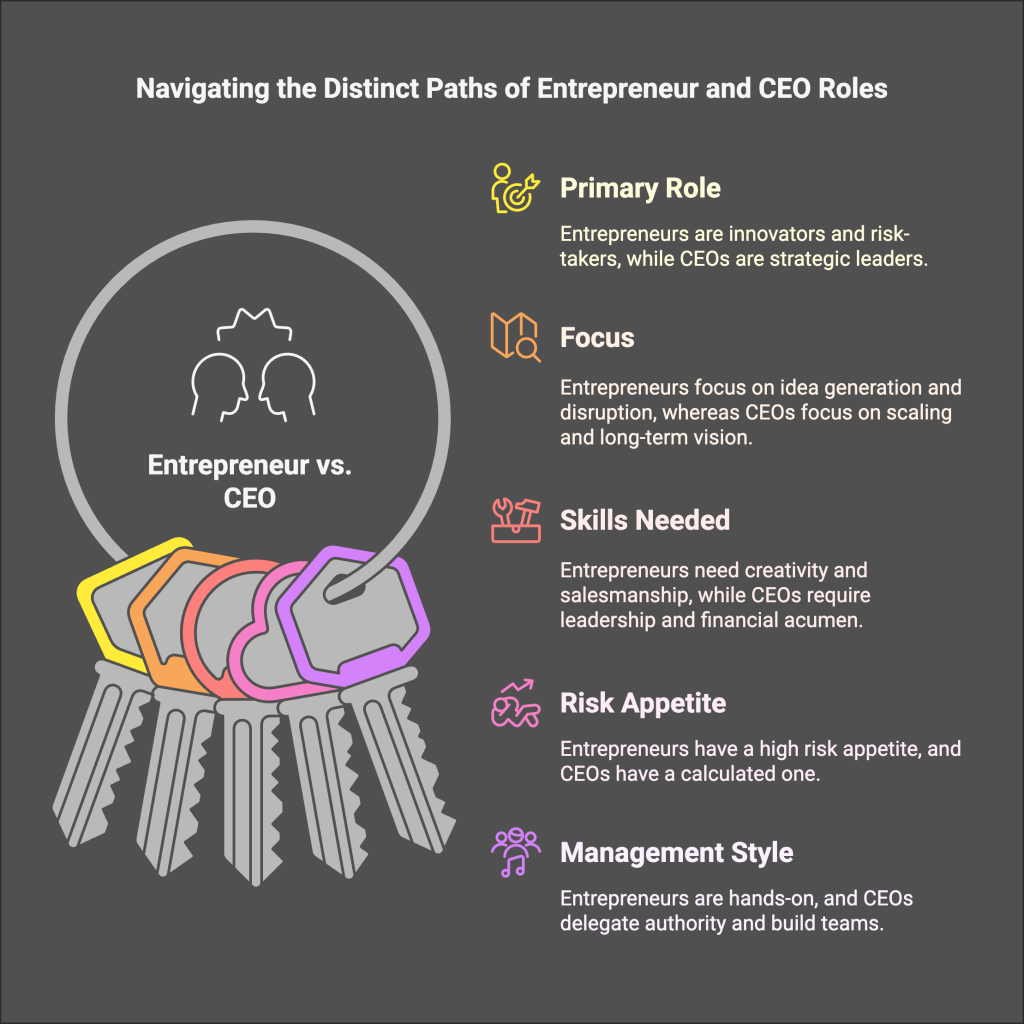
While entrepreneurs thrive in chaos and uncertainty, CEOs must bring stability, organization, and structure to a company. The transition from entrepreneur to CEO is challenging—and not every founder can make it successfully.
2. Why Some Entrepreneurs Struggle as CEOs
While some founders successfully transition into effective CEOs (e.g., Jeff Bezos, Mark Zuckerberg, and Elon Musk), many others fail in the role or struggle to adapt. Here’s why:
2.1 Lack of Interest in Operational Management
Many entrepreneurs love building but hate managing. They enjoy:
✔ Ideating and launching new products
✔ Creating market disruption
✔ Raising capital and generating excitement
But they often dislike:
❌ Managing teams and corporate structures
❌ Dealing with HR, compliance, and legal issues
❌ Implementing long-term financial and strategic plans
Running a company as CEO requires process-oriented thinking, delegation, and structure—which are areas where many entrepreneurs struggle.
2.2 Resistance to Delegation
Entrepreneurs often control everything in the early stages—product development, marketing, hiring, sales. But as the company grows, they must delegate authority to experts. Many founders:
- Struggle to trust others to handle critical business functions.
- Micromanage, slowing down company growth.
- Burn out from trying to do everything themselves.
A great CEO builds a strong leadership team and empowers others rather than acting as a bottleneck for decision-making.
2.3 Emotional Attachment to the Original Vision
Entrepreneurs are passionate about their ideas and personally invested in their business vision. However, companies often need to pivot and adapt as they scale. Founders can struggle with:
- Letting go of original ideas that are no longer effective.
- Accepting feedback that challenges their vision.
- Adapting to market changes and customer demands.
A CEO must make data-driven decisions rather than emotional ones—something many founders find difficult.
2.4 Difficulty in Managing People
Founders may be great at inspiring people, but leading and managing employees is a different skill set. A successful CEO must:
✔ Build and nurture a strong executive team
✔ Handle workplace conflicts and company culture
✔ Motivate employees with long-term goals and incentives
Entrepreneurs who lack emotional intelligence or leadership skills may find it hard to manage and retain top talent.
2.5 Struggles with Scaling and Long-Term Planning
Entrepreneurs thrive in fast-paced, high-risk environments, but running a large company requires long-term strategic planning. This includes:
✔ Creating efficient business systems and processes
✔ Ensuring financial sustainability and investor confidence
✔ Navigating corporate governance and compliance
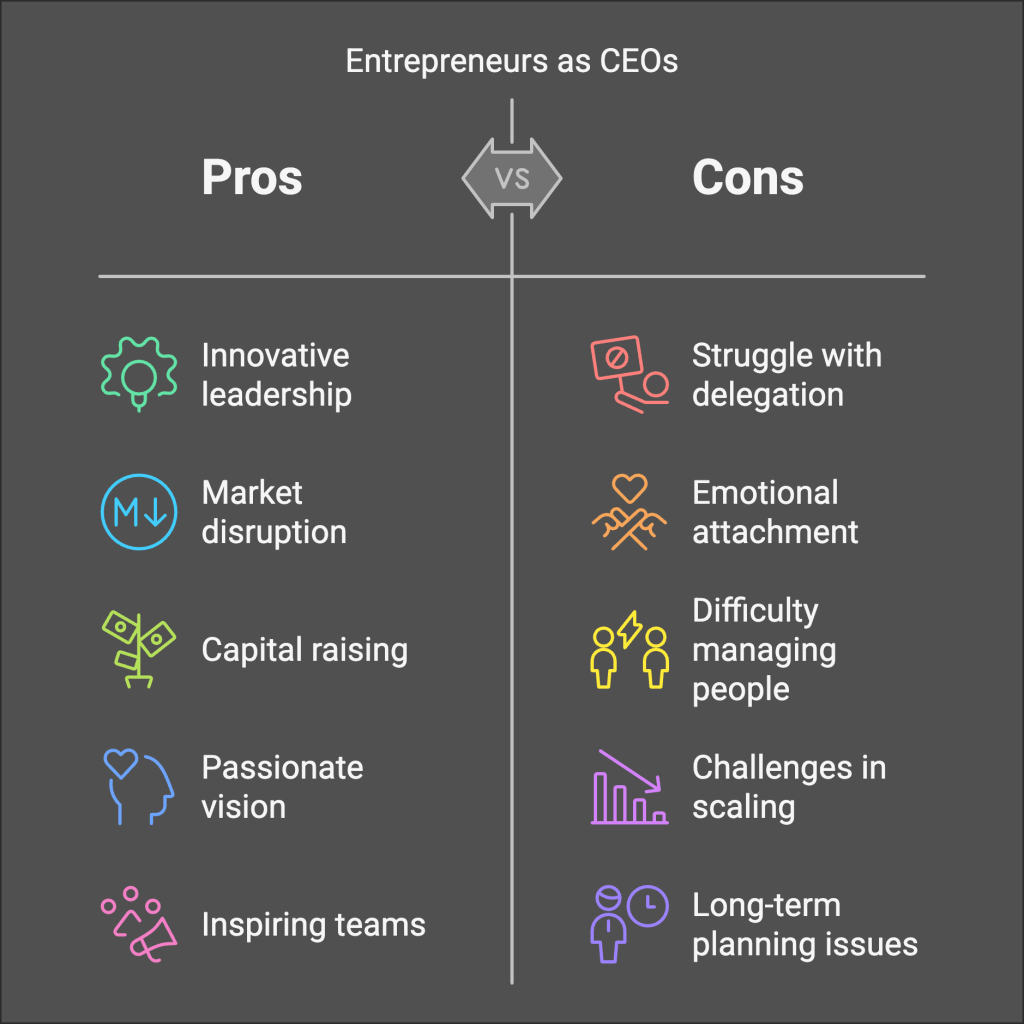
Many founders struggle with structured leadership—which is why investors often push for experienced executives to take over.
3. When Should an Entrepreneur Step Aside as CEO?
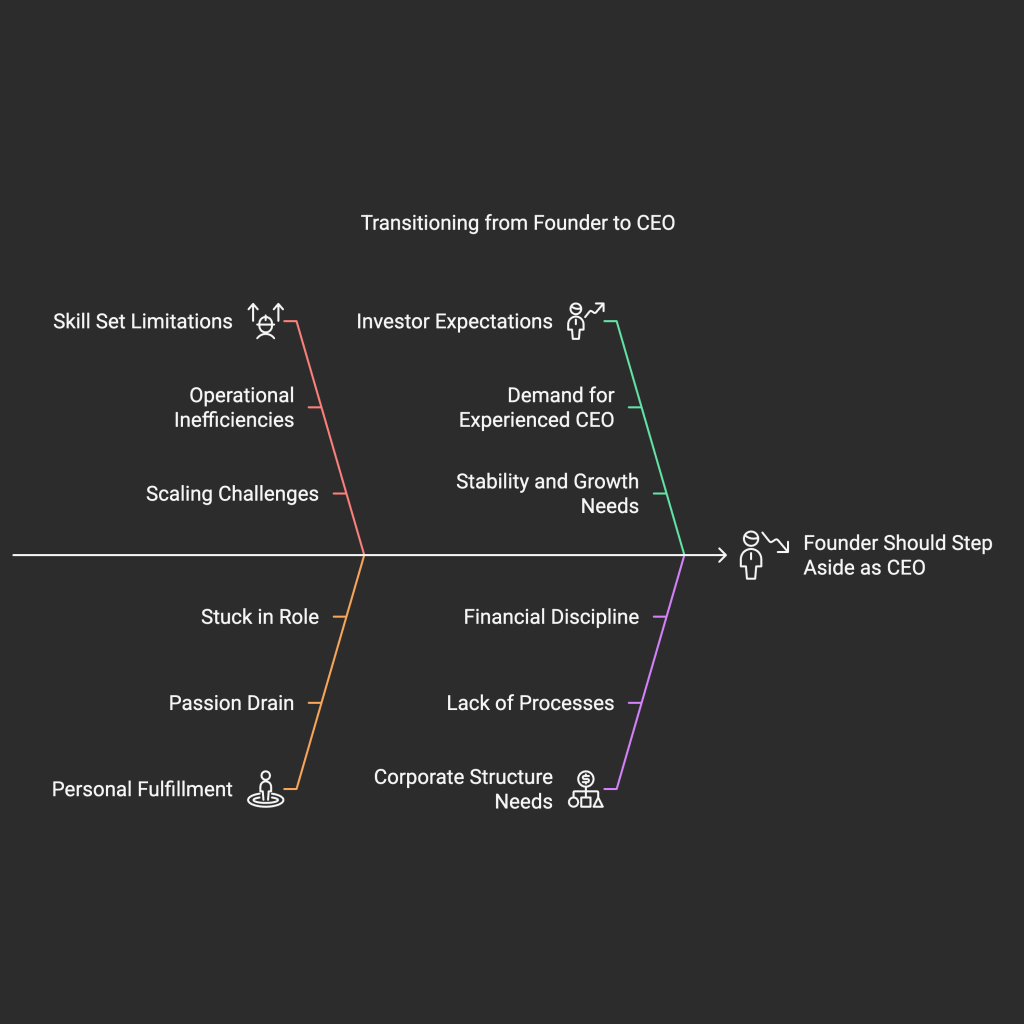
Recognizing when to step aside as CEO can be the best decision for the company and the founder. Here are signs that a founder should transition out of the CEO role:
✔ The company has outgrown their skill set – If operational inefficiencies are piling up and scaling is becoming a challenge, a seasoned CEO may be needed.
✔ They feel stuck and unfulfilled – If managing operations drains their passion, they should focus on areas where they excel—such as product innovation or business development.
✔ Investors demand leadership changes – Many startups that receive venture capital funding are encouraged to bring in an experienced CEO for stability and growth.
✔ They struggle to attract and retain top talent – If employees and executives aren’t thriving under their leadership, a change may be necessary.
✔ The company needs corporate structure – If the business is scaling quickly but lacks processes, governance, and financial discipline, a CEO with corporate experience can provide stability.
4. What Should Entrepreneurs Focus on Instead?
If not the CEO role, where should entrepreneurs direct their energy?
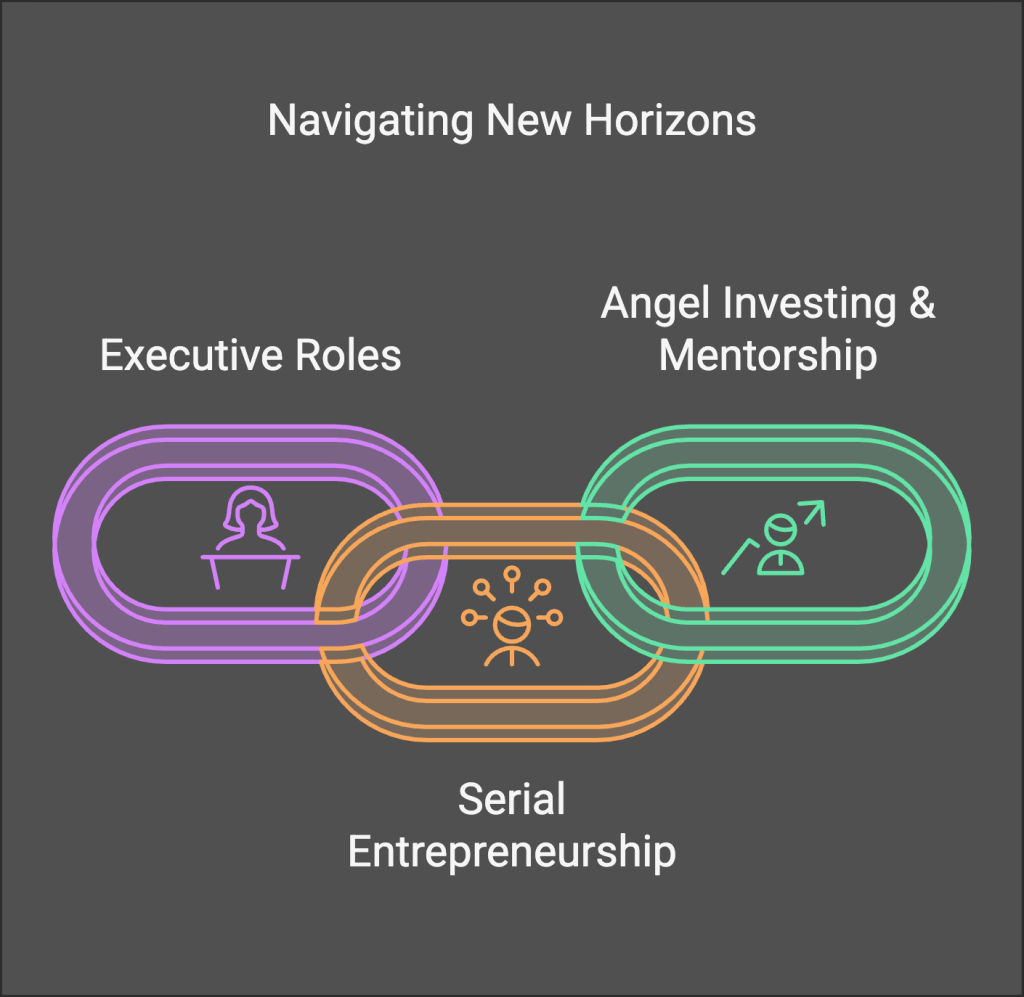
4.1 Becoming Chief Visionary or Chairman
Many founders successfully transition to roles like:
✔ Chairman of the Board – Influencing company direction without handling daily operations.
✔ Chief Product Officer (CPO) – Focusing on product innovation and growth.
💡 Example: Bill Gates stepped down as CEO of Microsoft but remained Chairman and Chief Software Architect, shaping the company’s future.
4.2 Launching New Ventures
Some founders are serial entrepreneurs—they thrive on launching companies but dislike long-term management. Instead of running a single business, they can:
✔ Start and exit multiple companies.
✔ Act as advisors or investors in new startups.
✔ Focus on early-stage business development.
💡 Example: Richard Branson delegated Virgin’s operations while continuing to launch new ventures under the Virgin brand.
4.3 Becoming an Angel Investor or Mentor
Many entrepreneurs transition into angel investing or mentorship roles, helping new startups succeed by sharing experience and capital.
💡 Example: Elon Musk invests in multiple industries beyond Tesla, including SpaceX, Neuralink, and The Boring Company.
Final Thoughts: Leadership Is About the Right Fit
Being an entrepreneur and a CEO requires different skill sets. While some founders successfully transition into great CEOs, many struggle with operational leadership, delegation, and corporate structure.
The best decision an entrepreneur can make is to recognize their strengths and place the right leadership team in charge to ensure sustainable business growth.
💡 What do you think? Should all entrepreneurs aim to be CEOs, or is stepping aside a better option in some cases? Drop your thoughts! 🚀
#Entrepreneurship #Leadership #CEO #StartupSuccess #BusinessGrowth #Founders #WorkLifeBalance
Download (FREE): 100 Proven Business Ideas You Can Start Today




You must be logged in to post a comment.