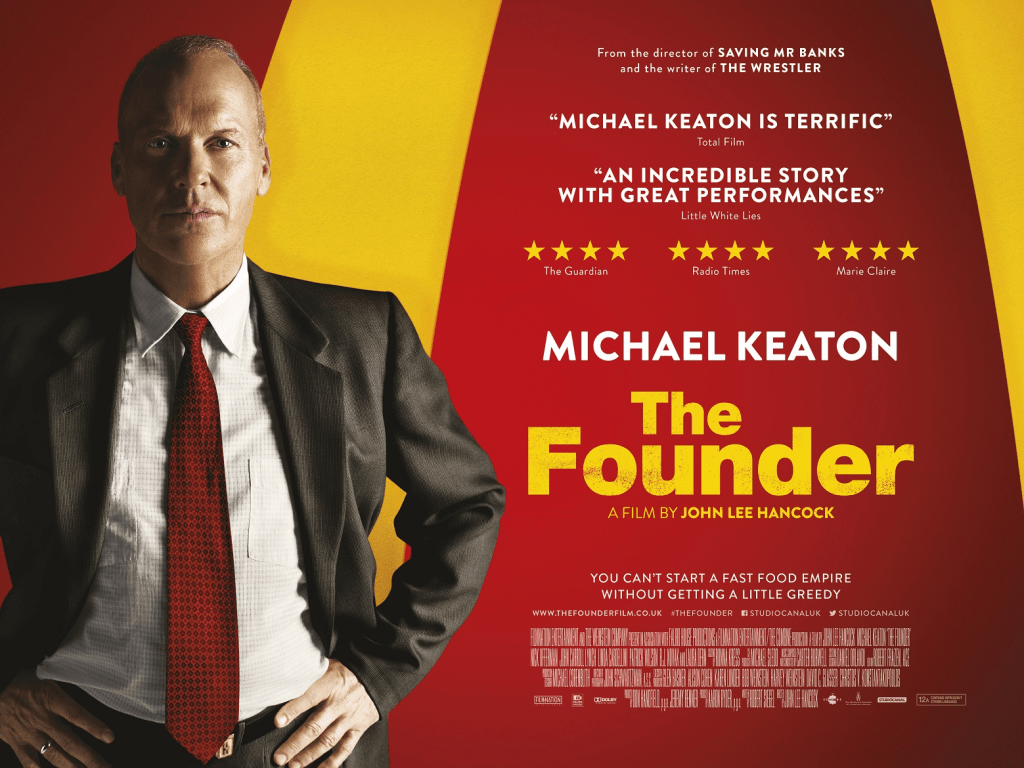
Today evening, I watched “The Founder”.
How can I not share it?
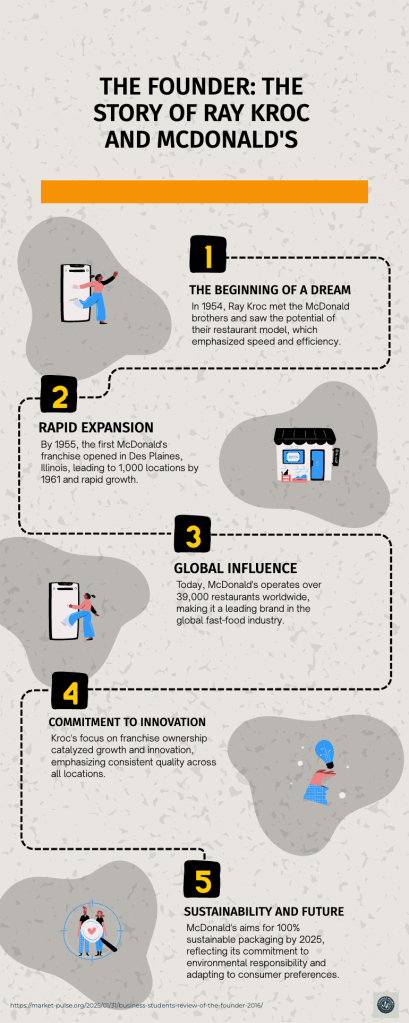
Introduction
In the world of business, few brands are as universally recognized as McDonald’s. But behind its golden arches lies a compelling story of ambition, strategy, and controversy. The Founder (2016), directed by John Lee Hancock and starring Michael Keaton as Ray Kroc, tells the dramatic tale of how a struggling milkshake machine salesman transformed a small burger stand into a global empire.
For business students, this film is more than just a biopic—it’s a case study in entrepreneurship, franchising, competitive strategy, and business ethics. It showcases both the brilliance and the dark side of aggressive expansion. By analyzing Kroc’s journey, students can learn valuable lessons about business persistence, operational efficiency, ethical dilemmas, and strategic decision-making.
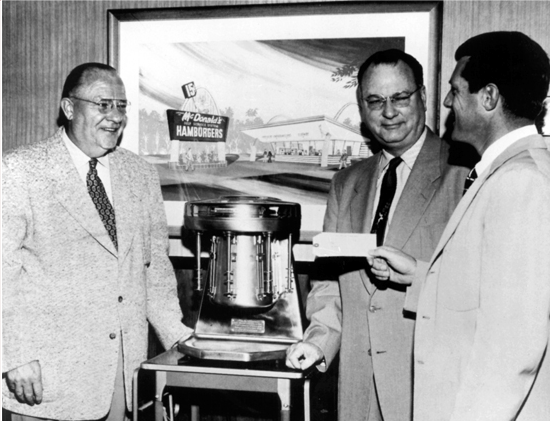
In this in-depth review, we’ll explore the critical business lessons from The Founder and how they apply to real-world business practices.
1. The Power of Persistence: How Ray Kroc’s Relentless Drive Led to Success
One of the most striking aspects of The Founder is Ray Kroc’s unwavering persistence. At the start of the film, Kroc is a struggling salesman, traveling from diner to diner trying to sell multi-mixer milkshake machines. He faces rejection after rejection but refuses to give up. His fortunes change when he stumbles upon the McDonald brothers’ revolutionary fast-food restaurant in San Bernardino, California.
Key Takeaways:
- Persistence is a fundamental trait for entrepreneurs. Kroc’s willingness to keep pushing forward, even when doors closed, ultimately led him to the right opportunity.
- Rejection is not the end—sometimes, it’s a redirection. Kroc’s initial failures set him up for his greatest success.
- Opportunities are often hidden in plain sight. The McDonald brothers had created an incredible business model, but they lacked the vision to scale it. Kroc saw what they couldn’t.
Real-World Application:
Many of the world’s most successful entrepreneurs—such as Steve Jobs, Elon Musk, and Jeff Bezos—faced repeated failures before achieving massive success. Kroc’s story reinforces the idea that resilience is often the deciding factor between success and failure.
2. Innovation and Operational Efficiency: The McDonald’s Revolution
Before Kroc entered the picture, McDonald’s was already an innovator in fast food. The McDonald brothers had created the Speedee Service System, a revolutionary kitchen operation that focused on speed, efficiency, and consistency. This system allowed them to serve high-quality food in record time, setting the foundation for the modern fast-food industry.
Key Takeaways:
- Process innovation can revolutionize an industry. The McDonald brothers changed the game by optimizing workflow and reducing unnecessary steps.
- Efficiency and consistency are key to scaling a business. A business that operates smoothly at one location can be replicated successfully at multiple locations.
- Innovation isn’t always about creating something new—it’s about improving existing systems. The McDonald brothers didn’t invent the hamburger, but they reinvented how it was made and sold.
Real-World Application:
Companies like Amazon and Tesla follow similar principles today. Amazon’s fulfillment centers operate with maximum efficiency, allowing them to ship products faster than competitors. Tesla’s streamlined production processes have disrupted the traditional auto industry.
3. The Power of Franchising: Scaling a Business for Growth
One of Kroc’s biggest contributions to McDonald’s was the aggressive expansion of its franchise system. The McDonald brothers were hesitant to scale beyond a few locations, fearing they would lose control over quality. Kroc, however, saw the untapped potential in franchising. By selling franchise rights to motivated entrepreneurs, he rapidly expanded McDonald’s across the United States.
Key Takeaways:
- Franchising is a powerful growth strategy. When done correctly, it allows businesses to scale rapidly without massive capital investment.
- Maintaining consistency is crucial for a franchise model. Kroc implemented strict operational guidelines to ensure that every McDonald’s location delivered the same experience.
- The right franchisees can make or break a business. Early in the film, Kroc struggles with unqualified franchise owners who don’t follow standards. He later shifts his strategy to recruit hands-on, committed businesspeople.
Real-World Application:
McDonald’s remains one of the most successful franchises in history, with over 40,000 locations worldwide. Other companies, like Starbucks and Subway, have also used franchising to dominate global markets.
4. Business Ethics and Ruthless Ambition: The Dark Side of Success
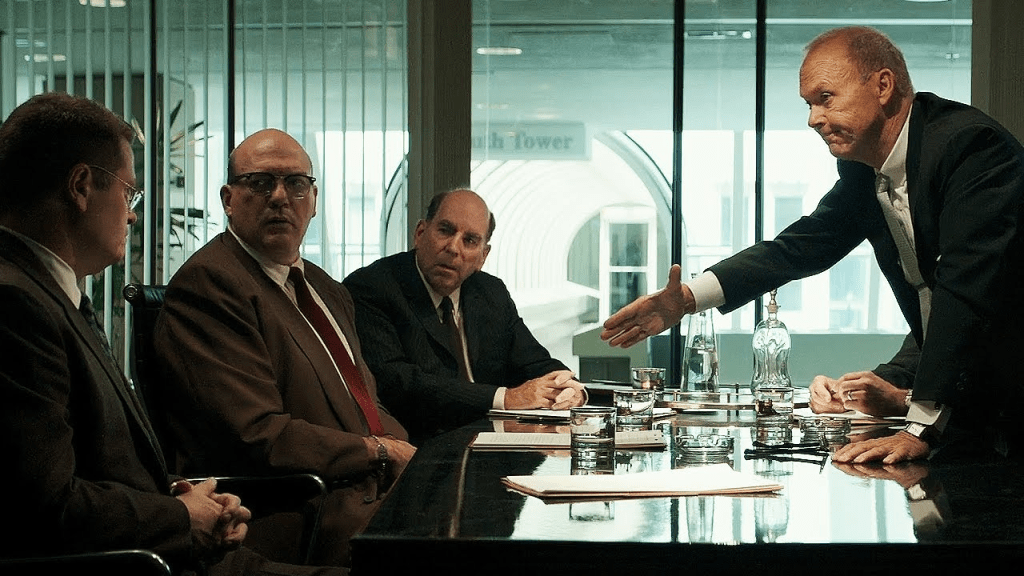
While Kroc’s ambition and strategic decisions led McDonald’s to global success, his methods were often ethically questionable. He manipulated contracts, disregarded his business partners’ interests, and eventually forced the McDonald brothers out of their own company.
One of the most controversial moments in the film is when Kroc tricks the brothers into a handshake deal for royalties—an agreement he later refuses to honor. This decision cost the McDonald brothers millions, while Kroc walked away with full control of the company.
Key Takeaways:
- Business success should not come at the expense of ethics. While Kroc built an empire, his legacy is also tainted by the way he treated his original partners.
- Legal agreements matter—never rely on a handshake deal. The McDonald brothers made the mistake of not securing their royalties in a legally binding contract.
- There is a fine line between ambition and exploitation. Kroc’s relentless pursuit of growth ultimately led him to betray those who helped him get started.
Real-World Application:
Many business leaders, such as Steve Jobs and Mark Zuckerberg, have faced criticism for their aggressive tactics. While ambition is important, long-term success is often built on ethical decision-making and fair partnerships.
5. The Importance of Real Estate in Business Strategy
One of the biggest turning points in The Founder is when Kroc realizes that McDonald’s true power isn’t just in selling burgers—it’s in owning the land under each restaurant. By purchasing the real estate for franchise locations and leasing it to franchisees, Kroc created a secondary revenue stream and gained leverage over franchise owners.
Key Takeaways:
- Real estate is a critical component of business strategy. Owning the land provided Kroc with financial stability and control.
- Diversified revenue streams lead to long-term success. McDonald’s makes a significant portion of its profits from real estate, not just food sales.
- Understanding hidden value in a business can lead to competitive advantage. Many successful businesses thrive because they capitalize on assets beyond their core product.
Real-World Application:
McDonald’s remains one of the world’s largest real estate companies, generating billions in rent from franchise locations. Other companies, like Walmart and Starbucks, also prioritize owning property as a long-term strategy.
Conclusion: A Must-Watch for Business Students
The Founder is more than just a story about McDonald’s—it’s a powerful lesson in business strategy, entrepreneurship, and ethics. Ray Kroc’s journey highlights the importance of persistence, the power of franchising, and the darker side of corporate ambition.
For business students, this film serves as both an inspiration and a warning. While Kroc’s vision and determination were remarkable, his ruthless tactics raise ethical concerns. The biggest takeaway? Business success is not just about seizing opportunities but also about how those opportunities are pursued.
Final Rating: ★★★★☆ (4.5/5)
✅ Invaluable business lessons
✅ Engaging and well-acted
❌ Ethical concerns about Kroc’s actions
Discussion Question for Business Students:
Do you think Ray Kroc was a visionary entrepreneur or a ruthless opportunist? Share your thoughts!




You must be logged in to post a comment.